
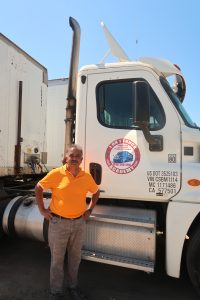
 From Industry Disruption to a New Direction in Trucking
When Nirup Dave first came to California Capital FDC Lending Center, he was working through a familiar challenge faced by many small business owners: strong experience and a clear vision, but limited access to financing to move forward.
After more than 20 years running a taxi business in Sacramento, Nirup’s industry was disrupted by the rise of rideshare services. Determined to rebuild, he shifted into trucking, earned his commercial driver’s license, and set his sights on purchasing a truck and building a new future in the industry.
But like many first-time borrowers, he quickly ran into barriers. Traditional lenders turned him away due to credit history, and the process of navigating financing options and documentation was complex and unfamiliar.
Building a Training Model Rooted in Real Experience
Through his own journey entering the trucking industry, Nirup began to recognize a larger gap beyond financing. He saw how many new drivers struggled not just with access to capital, but with the quality of training and preparation needed to succeed on the road.
Those experiences led him to create One-on-One Truck Academy, a Sacramento-based CDL training school built around individualized instruction and real-world readiness. The goal was simple: provide hands-on training that better prepares drivers for careers in trucking.
What started as a small operation has since grown into a full training academy with multiple trucks, trailers, a dedicated facility, and more than 700 students trained. The business is also expanding into freight operations through Safari Logistics, evolving into both a training provider and employer.
Access to Capital at a Critical Stage
Like many early-stage businesses, One-on-One Truck Academy needed working capital not just for equipment, but for the realities of day-to-day operations.
Through California Capital FDC Lending Center’s microloan program and technical assistance, Nirup was able to move forward during a critical stage of growth. The funding helped support essential expenses such as fuel, insurance, and other ongoing operational costs that are often difficult to cover through traditional equipment-based financing.
Just as importantly, the process helped bring clarity to the loan structure and documentation requirements, making it easier to understand how financing could be used in a practical, sustainable way.
“California Capital really helped me start my business. They approved my loan and gave me working capital, not just for buying a truck, but for fuel, insurance, and operating expenses. They also helped me understand the paperwork, which made a big difference for someone like me who didn’t have formal financial training.”
Building Stability and Scaling Impact
With that early foundation in place, One-on-One Truck Academy was able to stabilize and grow steadily. The business expanded its fleet, strengthened its operations, and developed a dedicated training facility.
Today, the academy has graduated more than 700 students who have gone on to pursue careers in trucking and transportation. It has also maintained key workforce and employment partnerships, helping connect trained drivers to real job opportunities in the industry.
As the business grew, it also expanded into freight logistics through Safari Logistics, further extending its role in the trucking ecosystem and creating additional pathways for employment and business growth.
Looking Ahead
What began as one entrepreneur’s transition into a new industry has grown into a broader platform for training, employment, and logistics services.
For Nirup Dave, the journey reflects persistence, adaptation, and the ability to turn industry challenges into opportunity. For California Capital FDC Lending Center, it reflects a continued commitment to supporting small businesses at critical moments of growth through access to capital and technical assistance.
Together, that support helps entrepreneurs not only start businesses, but build long-term impact in their industries and communities.